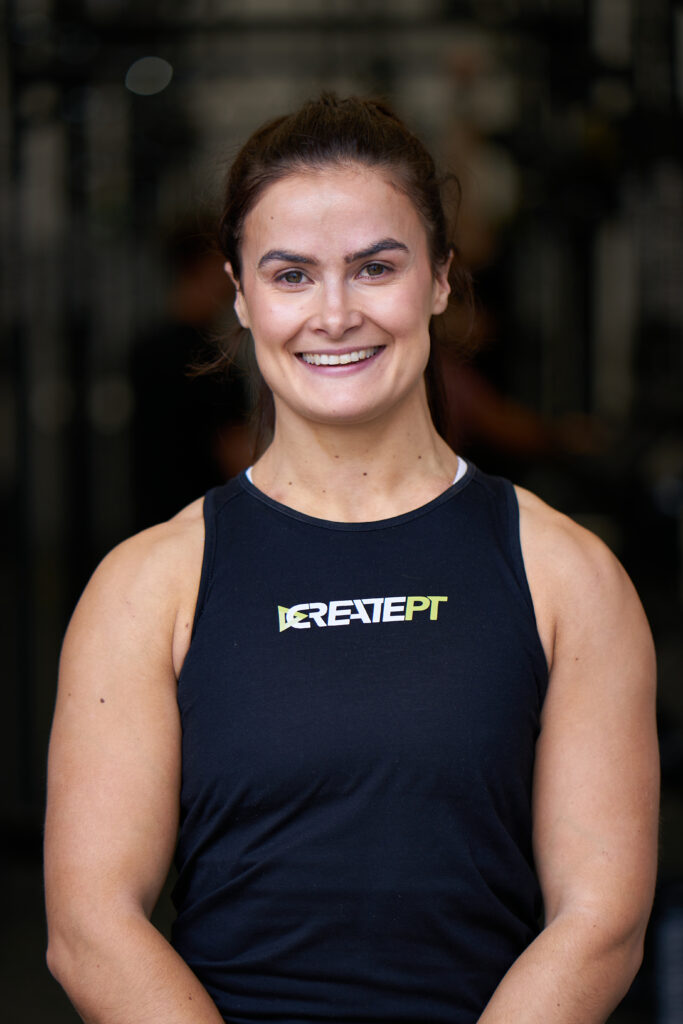
 Josie Winfield
Head of Training · 25 June 2024 · 13 min read
Reviewed by
Glenn Coburn
Curriculum Manager at YMCAfit, tutoring and assessing since 2013
Josie Winfield
Head of Training · 25 June 2024 · 13 min read
Reviewed by
Glenn Coburn
Curriculum Manager at YMCAfit, tutoring and assessing since 2013
For more information on our content creation process, view our Editorial Policy.
Are you tired of trying exercise programmes that don’t seem to deliver results? Or maybe you’re just getting started with your fitness journey and aren’t sure where to begin. Either way, having a well-designed exercise programme is key to achieving your fitness goals.
But what makes an exercise programme effective? And how do you go about writing one? This topic is absolutely huge, so there is no way we could cover everything in one blog article, but we’ve given you a pretty decent structure to follow below so you can start planning your programme and working towards your goals.

Before you start writing your exercise programme, it’s important to clearly identify what you want to achieve. Do you want to build muscle, lose weight, improve your endurance, or something else? Your goals will shape the type of exercises you do and the structure of your programme.
For example, if your goal is to build muscle, you’ll want to focus on strength training exercises that challenge your muscles to grow. If you’re trying to lose weight, a combination of cardio and strength training exercises can help you burn calories and build lean mass. And if you’re looking to improve your endurance, you’ll want to incorporate exercises that boost your cardiovascular capacity.
This stage is the foundation upon which all training programmes should be based. If you are reading this to research how to write an effective training programme for yourself then you first need to spend some time thinking about your goals in a structured way. When working with a coach they should take you through a SMART goal-setting process, this will ensure you’re setting appropriate goals.
So when programming for yourself you should go through the same process. SMART stands for specific, measurable, achievable, realistic relevant and time-bound. By following these goal-setting steps, it will be much easier to build an effective programme based on them.
An example would be “I want to run 5km in under 22 minutes by the end of the year”. It is specific because you have an exact distance and time you want to achieve. It is measurable because you will be timing the run to measure your progress. It is achievable because you will be incorporating regular running into your programme to improve your performance. It is realistic because your current 5km time is 27 minutes, so this improvement can be achieved within the time frame. It is time-bound because you have set a goal of achieving it by the end of the year which is 5 months away.
Now based on this SMART goal, you can be much more structured with your programme. Knowing you have 5 months to knock 5 minutes off your time means you can build a progressively overloaded programme incorporating some intervals, sprints and steady-state with specific timings to aim for will help specifically achieve that goal.
If you’re working with the coach, they should do a thorough consultation when they first start working with you. The aim of this is to get to know you and build rapport but also to ask the right questions so they can help you set some goals. The majority of coaches will use the above approach of SMART goals, so spend a bit of time with the coach and be open and honest with your answers so your goals align well with what you want to achieve.

Once you know what you want to achieve, it’s time to select the exercises that will help you get there. When choosing exercises, consider your current fitness level and any injuries or limitations you may have.
If you’re a beginner, it’s a good idea to start with bodyweight exercises or machines to build a foundation of strength before moving on to more advanced exercises. This will help you get comfortable with proper form and technique and reduce your risk of injury.
As a beginner, it also makes sense for most people to do full-body resistance sessions, rather than isolating certain muscle groups. Upper/lower splits, or push/pull splits are great for more advanced approaches but when you’re first starting it tends to work best to take the little and often approach, targeting all muscle groups regularly.
As you progress, you can add more challenging exercises to your programme. For example, you might move on to free weights, kettlebells, or other equipment that allows you to use a greater range of motion and engage more muscle groups.
Your training may also become more specific as you advance, rather than a goal of improving general fitness when you first start, you may decide you want to gain a few kilos of muscle, or like the example in the first point, you may be going to your local park run and want to improve your time.
Choosing the right exercises depends entirely on your goals. Specificity is the training principle that says training should be tailored to the specific demands of the activity you’re preparing for. For example, if you want to improve your 1RM back squat, you should be doing regular lower-body strength training, with a specific focus on back squats. If you’re running a marathon, then your focus should be on long-distance, endurance running.
This seems like common sense, but many programmes you see can be very random, not taking into account the end goal when it comes to exercise selection. So ensure you’re picking the right movements to progress towards your goals and you’ll be on the right track.
Now that you’ve identified your goals and chosen the right exercises, it’s time to put them together in a structured programme. Decide how often you’ll exercise and for how long. Government guidelines say to aim for at least 150 minutes of moderate-intensity exercise or 75 minutes of vigorous-intensity exercise per week, spread out over at least 3 days. This is obviously very generalised, however if you’re new to exercise then this is a great target to aim for.
To help you with structuring the programme we use an approach called periodisation. We won’t go into too much detail on this here as an entire course could be written on programme design and periodisation, however knowing the basics will help you to structure your programme effectively.
Periodisation is fundamentally about breaking down the training process into manageable blocks or periods. Each block progresses towards its own training goals and the blocks combine to help you towards your overarching long-term goals.
Periodisation typically breaks the programme down into 3 phases; macrocycle, mesocycle and microcycle. As a basic template for your programme, you should use this approach. This is usually 12 months for the macrocycle, 4 x 3 months for the mesocycles and 1-4 weeks for the microcycles. However, you may want to start your programming journey by basing it on a shorter timescale so let’s use a 16-week training goal. The macrocycle is the whole 16-week period, the mesocycle would be the 4-week blocks within the 16 week period, and the microcycles would be each individual week. The image below may help you visualise this.

Using this approach helps you continue your training stimulus towards your overarching goal. To keep it simple we’ll just set one goal for the macrocycle goal of increasing your back squat 1RM from 120kg to 140kg. Each mesocycle of 4 weeks would include a group of exercises that stay the same through the 4 weeks, but the intensity should be increased over the 4 week period. Then each microcycle within a mesocycle makes up a week and will be a breakdown of each session.
To give you an example using the above macrocycle goal of increasing the back squat by 20kg. Mesocycle one will include three weeks of lower body resistance movements, increasing in intensity each week, with the 4th week as a deload before moving on to the next mesocycle. The first mesocycle will have a focus on movement quality and correct positions with a gradual increase in weight. The microcycles within the first mesocycle will include 4 workouts per week with 3 rest days, including a range of lower-body strength movements, trunk exercises and some upper-body strength work.
Now you have the structure, you insert the exercises, sets, reps, rest and any other variables you want to progress for each week within the mesocycle. Then you plan how you want to progress each mesocycle, and then plan the microcycles to go within it.

The above should give you the perfect way to structure your programme, now within each of those mesocycles you need to gradually increase the intensity so that you’re eventually lifting more weight and achieving your goal of 140kg back squatting. This is where the principle of progressive overload comes in.
This term is pretty self-explanatory, you progress the programme by gradually increasing 1 or more variables on an ongoing basis so that the stimulus adapts as your body adapts. To put it simply, you increase the weight, or the reps or the sets each week so that over time the exercise becomes more difficult, but your body will be adapting too so that it can deal with the increased intensity.
For a beginner you want to progressively overload the programme cautiously so you don’t risk injury, however, beginners can experience what’s called “newbie gains”. This can happen with all sorts of endeavours, you experience rapid initial progress because you’re exposing yourself to a new stimulus with a fairly steep learning curve. With resistance or cardio training this happens almost without fail, as going from zero activity to something is a huge % increase in terms of activity.
So taking this into account with your programme, you’ll need to bear in mind that you might see some rapid improvements and need to progress your programme more than you expected at the start. Unfortunately, this rapid rate of improvement won’t last though, you will continue to improve as long as you train for it, however, the rate of improvement will slow, so you’ll need to overload your programme appropriately.
There are different methods of assigning intensity, the main ones for resistance training include percentage of 1 rep max, RPE and reps in reserve. For cardio training, it is predominantly % of max heart rate or RPE.
For beginners, we would always recommend using RPE. RPE means the rate of perceived exertion, it is a scale from 1-10 (if using the modified Borg scale but we won’t go into that), whereby 1 is no effort at all and 10 is the absolute maximum effort that you could only maintain for a few seconds for cardio, or you couldn’t possibly do any more reps for resistance training.
We recommend RPE for beginners because if you’re just starting then you won’t know what your 1 rep max is on different lifts, and for cardio, certain heart rate zones may be particularly difficult for you if you’re new to exercise. So knowing that you have to aim for a 7 out of 10 difficulty is far easier to track, it also means if you’re having an off day or a really good day, then you can take it easier or push yourself harder based on how you feel on the day.
With regards to progressive overload, RPE allows you to continually progress without having to know in advance what intensity to assign. For example in week 1 RPE 7 for 10 reps on the leg press may mean using 50kg, then by week 4 RPE 7 for the same number of reps may mean using 70kg. Just by increasing your strength over time, the same perceived level of effort means you’re lifting more weight, and therefore you’re progressively overloading without even really thinking about it.
If you’re a more advanced athlete then you may want to use RPE to force progression over time, with 5 sets of 5 reps of a back squat in week 1 at RPE 7, progressing to an RPE 9 by week 4. If you’re advanced then you’re not likely to see big improvements in the weight you lift from one week to the next, but by increasing the RPE you’re forcing yourself to lift more weight which will in turn result in strength gains over time.

One of the keys to staying motivated and achieving your goals is tracking your progress. Keep track of your workouts, including the exercises you did, the sets and reps, and the weight you used. This will help you see how you’re progressing and make any necessary adjustments to your programme.
You can use a notebook, a spreadsheet, or a fitness app such as MyPTHub to record your workouts. Just be sure to choose a method that works for you and is easy to use.
It may feel a bit laborious keeping note of every set, but it is so worth it. If you don’t have a record of what weight, reps, sets etc you did, then it becomes impossible over time to effectively progress your workouts.
It will be especially helpful when you start to hit plateaus, if you have the data to show that you’re not making progress based on the current stimulus, then you know it’s time to change it up. For example, if you’re using RPE to determine weight, and your training log shows that at RPE 8, your sets of 5 back squats stayed at the same weight for 3 consecutive weeks then maybe you should try to progress it in a different way. Rather than increasing the weight you could add or deduct a rep, which will change up the stimulus and allow you to push through the plateau hopefully.
A lot of programming is about adapting as you go, it is great to have a structured macro/meso/micro cycle plan, but the most scientifically optimised plan in the world might not be getting you the best results for a whole range of reasons. So tracking everything enables you to make tweaks as you go to get the best results.
To see the best results, it’s important to stick to your exercise programme consistently. Make exercise a regular part of your routine and be consistent with the frequency, intensity, and duration of your workouts.
It can be helpful to schedule your workouts in advance and plan for any potential obstacles or distractions that might come up. You might also consider enlisting the help of a workout partner or joining a fitness class to help keep you motivated and on track.
When planning your programme it can be easy to get tempted into being very optimistic with the volume and intensity of the sessions. On paper, a session might look great, but in reality, you might find it really unenjoyable, which may lead to you not sticking to it.
We always recommend programming with adherence as one of the primary objectives. Unless you or the person you’re programming for are insanely driven, the likelihood of sticking to the “perfect” program if you’re not enjoying it is very low.
Instead, aim for something you’ll stick to regularly. A good way to think about this is “what would I be happy doing on my worst day, rather than what I could do on my best day”. This changes the emphasis from having to plan the most perfect sessions, to planning something you know 100% that you can stick to.
Consistency is key. You’ll get far greater results following a less intense programme that you stick to than you will following a super-optimised performance programme that you only end up doing half of.

If you’re new to exercise or have any health concerns, it may be helpful to work with a personal trainer or exercise professional to design a program that is safe and effective for you. They can help you choose the right exercises and structure your program in a way that meets your needs and goals.
Although we’ve given you a bunch of advice in this article about how to program for yourself, in our PT course there is an entire module on this topic that takes weeks to complete. So that gives you an idea of how much more depth you can and probably should go into before planning a programme.
Instead of winging it and probably not getting the best results, why not recruit a PT to help? They should have the requisite knowledge and experience to help you towards achieving your goals better than you can yourself.
In summary, writing an effective exercise programme involves identifying your goals, choosing the right exercises, structuring your programme, progressive overload, tracking your progress, being consistent, and seeking professional guidance when needed.
As we said in the last point, we’d really recommend seeking the help of a personal trainer to help you get the best results, but obviously, that is not an option for everyone. So following the steps above should help you on your way to planning a pretty decent programme
Remember, everyone’s fitness journey is different, so be patient with yourself and stay committed to your goals. With the right exercise programme and a little bit of dedication, you can reach new levels of fitness and feel your best.
Josie Winfield
Head of Training
Josie has worked in fitness for eight years, first as a personal trainer and now as a tutor and assessor at Create. She has competed in CrossFit at elite level and specialises in nutrition.
Reviewed by Glenn Coburn, Curriculum Manager at YMCAfit, tutoring and assessing since 2013.
More about Josie →