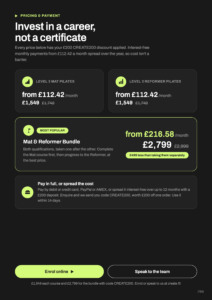
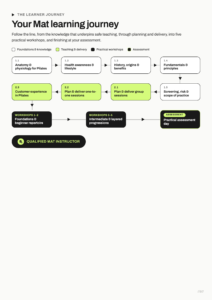
Level 3 qualifications in Mat and Reformer Pilates, awarded by Focus Awards. Mat is where everyone starts, and you do not need a fitness qualification to begin. Reformer builds on it, or take both together.
Before you pick a route, it helps to know what teaching Pilates actually asks of you.

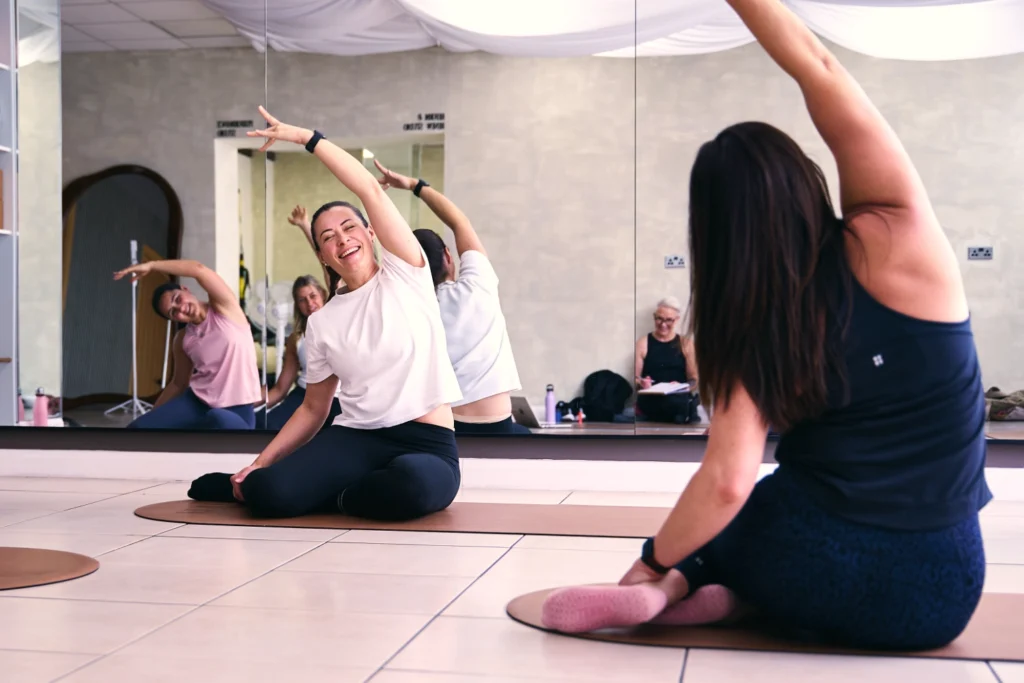
Teaching Pilates is a different job to doing it. In a class you follow. Teaching, you are the one holding the room: watching twelve bodies at once, spotting the shoulder that has crept up, changing a cue mid-sentence because the first one did not land, and keeping a whole class moving while you fix one person quietly.
That is mostly what the qualification teaches. Not the repertoire, which you probably half know already, but how to see what is actually happening in front of you and what to say about it. Cueing, observation, correction, and knowing when to leave someone alone. It is why the practical side matters and why nobody learns this from a video.
Mat comes first because it is the method with nothing to hide behind. No springs, no straps, no carriage doing part of the work. If you can teach a good Mat class you can teach, and Reformer then becomes a piece of equipment you learn rather than a method you start again with. That is also why Reformer has a Mat qualification as its entry requirement, here and almost everywhere else. Our guides to becoming a Mat instructor and becoming a Reformer instructor walk through both.
The work itself is flexible in a way most jobs are not. Instructors teach in studios, in gyms, in village halls, in their own space, and online. Some teach four classes a week alongside another job. Some build it into the whole thing. We have written up what Pilates instructors actually earn and how the route works end to end if you want the detail before you commit.
You do not need to be able to do every exercise perfectly. You need to understand what each one is for, and be able to get someone else there.
You already practise, you already know the repertoire better than you think, and you have started watching how your instructor teaches rather than just following.
Theory online at your own pace, practical work in person. Most people keep working and keep practising throughout, and start cueing friends long before they finish.
Usually a cover slot, a small group, or a class you set up yourself. The first ten are the hard ones. After that you stop reciting and start teaching.
Regulars who come for you rather than for the slot. This is the point most instructors add Reformer, because studios timetable both and clients want both.

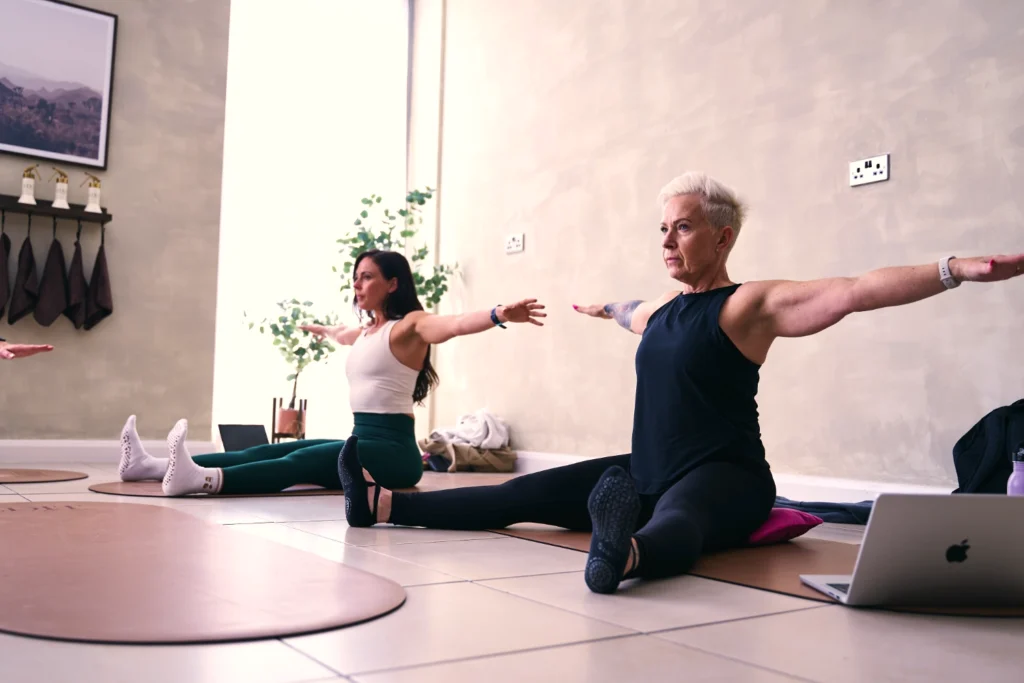
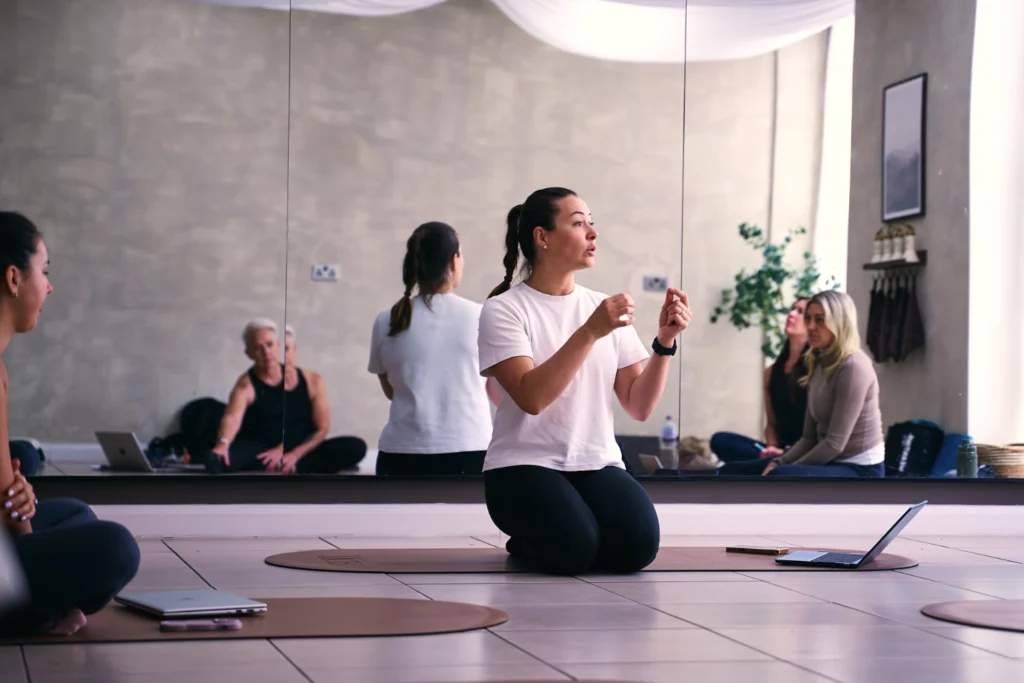
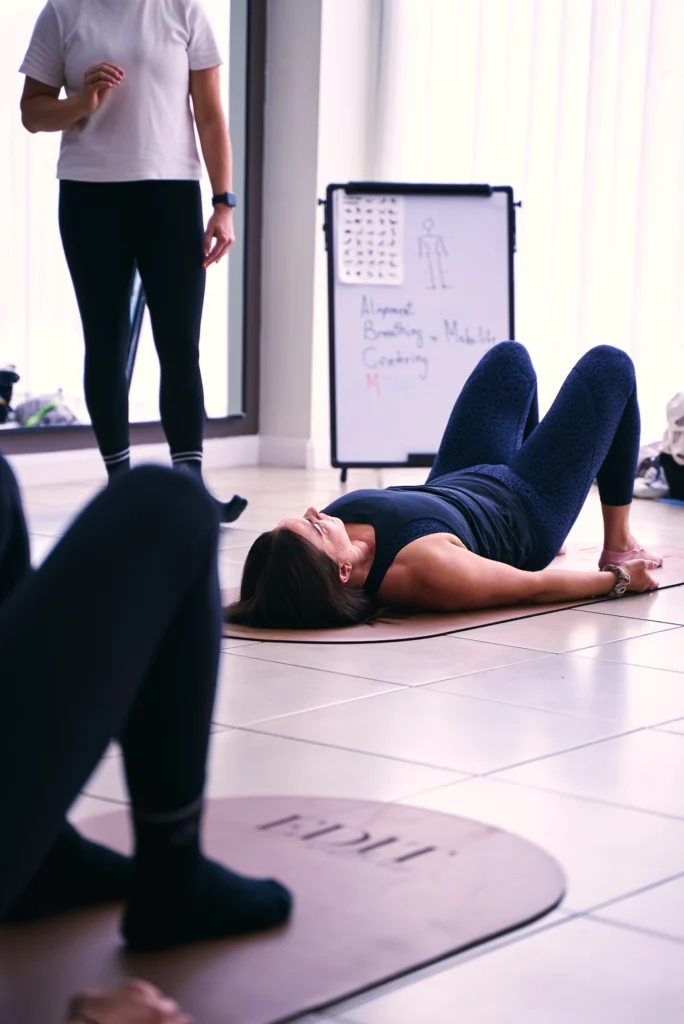
Useful feedback, fast, so you are not waiting a fortnight to find out whether you got it right.
Ask a tutor a question and hear back the same working day, not the same week.
Resubmit for as long as you have course access, at no extra cost. Nobody is passed before they are ready.
The people marking your work are coaching clients this week, not teaching from memory.
No cohort to keep up with and no set start date. Twelve months of access from the day you enrol.
Most people study around a job, which means evenings and weekends. Somebody is there then.





The only provider in the UK to offer it. Not a trial period. Not credit towards something else. Your money back.
98.8% of learners rate the course as satisfactory or better. A qualification people do not rate is not worth selling, so if the course does not do what we say it does, we should not be keeping your money.
You have 14 days from the day you enrol to change your mind, for any reason. Fully online courses keep the full 14 days. Where a course includes in-person elements and you attend one inside the 14 days, the cancellation right ends at that point.
A separate promise that applies once you have completed the course. It is not a cancellation right and it is not affected by the 14 day period. Both exist, and you do not have to choose between them.
 Career Advice · 8 min read
If you are weighing up an online vs in-person PT course, the honest answer is that neither is universally better. It comes down to…
Read the articleNo. You’ll need a recognised Level 3 Mat Pilates qualification before starting, as Reformer builds directly on Mat fundamentals. A Level 3 Mat Pilates qualification is required as a pre-requisite. If you don’t hold one yet, our Level 3 Pilates Instructor Bundle (including Mat and Reformer Level 3 qualifications) lets you complete both back to back.
Yes. On completing the bundle you’ll be qualified to teach both Mat and Reformer Pilates, in group classes and one-to-one sessions.
Yes. This qualification allows you to teach Mat Pilates in both group classes and one-to-one sessions, and is accredited by Focus Awards and recognised by insurers. Many learners go on to add Reformer afterwards to widen what they can offer.
Yes — within a fitness-based setting and within your qualification’s scope of practice. The course prepares you to deliver structured Reformer group classes safely in a fitness environment. Note it’s a CPD course rather than a full Pilates qualification, so it teaches you a reduced repertoire and does not qualify you to teach a full repertoire. For that you need the Level 3 qualification.
It’s helpful but not essential. The practical workshops give you hands-on Reformer experience, and we guide you on how to practise between sessions where possible. If access helps, it may be worth investing in your own at-home reformer from a company like FOLD, or negotiating off-peak access to your local studio to practise.
Yes – the bundle is a cost effective way of buying both qualifications. You complete them in order with Mat first, followed by Reformer once complete. As Mat is a pre-requisite for Reformer, they must be completed in this order.
No prior Pilates experience is needed. The diploma starts from the foundations and builds your knowledge and teaching skills step by step.
This is a CPD course focused on delivering Reformer classes in fitness environments, rather than a full studio-based or clinical Pilates qualification. It’s shorter and more applied — ideal for fitness professionals adding Reformer to their offering.
Level 3 Mat takes around 12-16 weeks to complete, and Level 3 Reformer takes around the same amount of time. So typically it will take around 6 months to complete the full Level 3 Mat + Reformer pathway.
Most learners complete it within 12-16 weeks, depending on their pace and the practical workshop dates they attend.