Many new personal trainers are told to go self-employed straight away. Here is what each route really involves, and why starting employed can be the better first step.

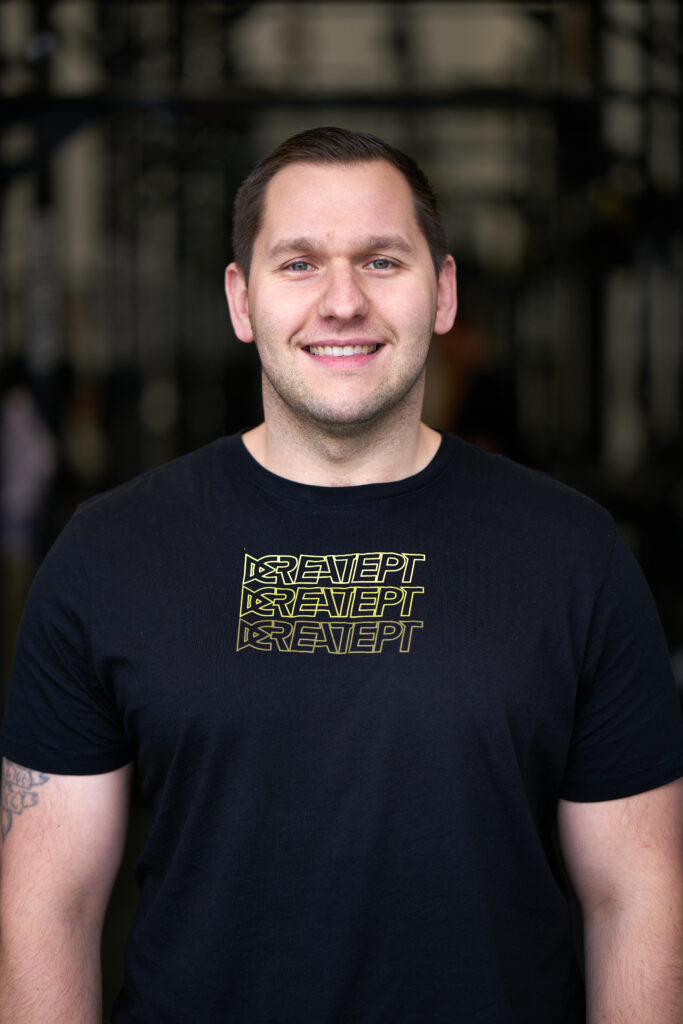 Josh Thursby
Founder & CCO · 15 October 2026 · 9 min read
Reviewed by
Ollie Bell
Award winning, published author, certified at Harvard and Oxford
Josh Thursby
Founder & CCO · 15 October 2026 · 9 min read
Reviewed by
Ollie Bell
Award winning, published author, certified at Harvard and Oxford
If you are newly qualified, or about to be, you will hear the same advice again and again: go self-employed, keep 100% of what you charge and be your own boss. Being a self-employed personal trainer can be a great career. But starting there, with no clients and no income, is where a lot of new trainers come unstuck.
This guide compares the two routes: how each one works, what you gain, what it costs you, and the point at which switching makes sense. It draws on the experience of Josh Thursby, Create’s co-founder, who spent 18 months as an employed personal trainer at Nuffield Health before going self-employed.
The pattern is familiar. Someone who loves fitness qualifies, rents space in a gym and is left to their own devices. Three months later the diary is still half empty, the rent is still due, and they go back to the job they had before.
When that happens, everyone loses. The trainer has paid for a qualification they no longer use. The industry loses someone who cared. And the clients they could have helped never meet them.
Often the problem is the model they start on: it needs a client base before they have one.
An employed personal trainer works for a health club or gym on a PAYE contract. Health clubs such as Nuffield Health and David Lloyd typically employ their trainers this way. You are paid a wage or salary, and the club sells personal training to its members.
This is the biggest advantage. Every new member passes through a sales process the club has already built: sign-up, reception, the membership team, inductions and taster sessions. Each one is a chance to meet someone and build the relationship that turns them into a client. Self-employed, you would have to find and pay for all of that yourself.
Premium health clubs also tend to attract members with more to spend. As an example, if someone pays £30 a month for a budget gym, £45 for a single session can feel like a lot. If they already pay £120 a month for their membership, adding personal training is a much smaller step.
Paid annual leave, sick pay and pension contributions are easy to ignore when you are starting out. They matter. A self-employed trainer who takes a week off for illness or a holiday earns nothing that week, and still pays for the holiday.
Employed roles vary a lot. Before you accept one, check how many hours are guaranteed, which floor duties and classes are expected, who sets your session prices, and whether the contract restricts personal training outside the club. Some do, and it affects what you can build on the side. Some also restrict working with club members after you leave, so read that clause too.
A self-employed personal trainer runs their own business, usually as a sole trader. Most work from a gym and pay a monthly rent or fee for the right to train clients there. Some agreements swap part of the rent for hours on the gym floor. This model is common in budget gym chains.
You set your own prices, choose your hours and keep what you earn once rent and costs are paid. You also find your own clients. The gym brings members through the door, but it does not pass them to you. You still have to meet them on the gym floor, build trust and win them over, often alongside other trainers doing the same.
Self-employment gives you real control. There are no set shifts, no midday shift wedged between a 6am client and a 7pm one, and you can keep weekends free if you choose. But while you are building a diary, your clients decide when you work. Josh delivered 5.30am sessions for 12 and a half years. If a client can only train at dawn, that is usually when you train them.
You can build a brand around who you are and the clients you want to work with. People buy from people, and that counts. You can also add income streams such as online coaching, small group sessions or your own branded clothing.
Some business costs, such as gym rent, can usually be deducted as allowable expenses, which reduces the profit you pay tax on. They are not refunded, and the rules on things like travel and clothing are specific. Check what qualifies on GOV.UK or with an accountant.
You handle your own tax return, invoicing, data protection and marketing. Some weeks that takes very little time. When your tax return is due, it can take days. Every hour on admin is an hour you are not delivering paid sessions, so build it into your plans.
Employed is not better forever. There comes a point where the share the gym keeps is worth more than what it gives you back.
Here is a worked example. It is an illustration, not a typical figure. Say you charge £45 a session and the gym keeps around half, £22.50. At 20 sessions a week, that is £450 a week going to the gym, or roughly £1,800 every four weeks.
Self-employed, you keep the full session fee and pay rent instead. If your client base is steady and your rent is lower than what the gym was keeping, you come out ahead. To run your own numbers, try our income calculator.
That £1,800 is not all lost money. It pays for the leads, the marketing, the paid holiday and the sick pay the gym provides. Before you switch, count what you would have to cover yourself: rent, insurance, time on admin and marketing, the sessions you lose when clients are away and the weeks you earn nothing because you are ill.
If you are newly qualified and want to learn the job, build coaching hours and have a steady income, start employed. That is what Josh did. He spent 18 months at Nuffield Health, built a client base, grew in confidence and delivered a consistent number of sessions every week. Then he moved to a gym nearby, paid rent and went self-employed. Many of his clients moved with him.
Self-employed is the right model if you already have an established client base, are confident marketing yourself and want to grow your income beyond a salary.
You can start self-employed. It can suit someone training clients alongside another job, where the aim is extra income rather than a full living. For most people making personal training their career, though, employed first and self-employed second is the steadier route.
If you are newly qualified, starting employed is a great option. Learn the ropes, build your confidence and get consistent with your sessions. When that is in place, go self-employed. It is exactly what I did, and I never looked back.
Josh ThursbyFounder & CCO
| Your situation | What to do |
|---|---|
| Newly qualified, no clients yet | Employed |
| You need a guaranteed income and paid time off | Employed |
| Training clients alongside another job | Self-employed can work |
| Around 20 sessions a week and a steady client base | Time to look at self-employed |
| Confident marketing yourself and want to grow past a salary | Self-employed |
If you are still choosing a qualification, our guide to becoming a personal trainer sets out the route. Once you are qualified, see the best personal training jobs, look at our gym partners, and get your application ready with our personal trainer CV examples. If you plan to go self-employed, our guide to starting a PT business sets out the steps, and PT Business Accelerator covers the business side. To see what you could earn, try the earnings potential quiz.
Josh Thursby
Founder & CCO
Josh qualified as a personal trainer in 2008 and spent twelve and a half years training clients face to face, delivering 45 to 55 sessions a week at his peak. He co-founded Create and writes about the commercial side of the job.
Reviewed by Ollie Bell, Award winning, published author, certified at Harvard and Oxford.
More about Josh →