Realistically, four to eight months from starting your course to your first paying client. Here's every step, how long each one takes and where people get stuck.

When someone rings us and says they want to become a personal trainer, the first thing I do is congratulate them. It’s a brilliant industry to be looking at.
The second thing I tell them is that we’re here to get them a qualification, not a certificate. There’s a big difference. A certificate is a piece of paper. A qualification means you’re actually ready for the industry, and you can make a success of something you’re passionate about, rather than getting the paper and then getting lost in the wilderness.
So, how long does it take to become a personal trainer? Here’s the honest version, including the bits most people don’t talk about.
That range is wide for a reason. Below I’ll go through each step, what makes the difference between the fast end and the slow end, and where people get stuck.
If you want the bigger picture of what the career looks like, have a look at our guide to becoming a personal trainer. This article is just the timeline.
Honestly, not much. You need to be 16 or over. That’s it.
There are no prior qualifications you need to start Level 2. If you’ve done a sports course at college, or anything related at university, it will help you get through the course quicker. But it isn’t a requirement.
Some people are told they can, and some people can. But only if you already hold a Level 2 Gym Instructor qualification.
Plenty of people have done that at college, at university or with another provider. If that’s you, send us your certificate. We check that it’s recognised by an awarding organisation and by CIMSPA, and then you can move straight on to Level 3.
What we won’t do is let you skip Level 2 on the basis that you’ve been training for years. We ask for the certificate every time.
Here’s every step from our first conversation to your first paying client, and how long each one realistically takes.
We go through everything with you: what you want to do, where you want to work, how much time you've got. Then we work out which course is actually the right one for you to begin with. Sometimes that conversation ends with me telling someone to wait. More on that further down.
Once you're set up, you work through the programme at your own pace. Around 95% of our learners are doing this alongside a full time job or full time education, and we built the courses with that in mind. If you can commit five to ten hours a week, three to four months to qualify is realistic. Thinking about it honestly, a lot of people take longer. Life gets in the way. Holidays, work, kids, all of it. I'd say closer to six months is the realistic figure for most people.
Your practical assessments are filmed, and you need someone to act as your client. Usually that's a friend or family member. This is where a lot of people lose time, and I'll come back to why.
Once you've qualified, we do everything we can to help you find work in your local area, through the connections we have and through the Raize recruitment platform. You can look for jobs on there, and we can find them for you too. From first interview to starting, most gyms want a quick turnaround of two to four weeks. If you're already in a job, your notice period could add anywhere from two to four weeks up to three months.
Your first paying client can come as soon as you're on the gym floor doing PT tasters. You want to be getting your first paying client within your first four weeks. That should be the minimum you're aiming for. Get on the gym floor, talk to people and get yourself booked in with inductions and tasters from day one.
One part of the course I love is that you build a PT business plan. Some of our learners have taken that plan into job interviews and said, "I've done this on the course. This is who I want to work with. This is what I want to build in my first quarter and my first year. These are the things I know I need to do to get there." That's gone down really well with gyms.
The biggest one is simply the time you’ve got available. After that it’s your starting point. Someone who struggles with parts of the course is going to take longer, because there may well be some referrals along the way, compared to someone who’s already done a sports science degree. Neither is wrong. It just changes the timeline.
| Faster | Slower |
|---|---|
| You've got more time to give the course each week | Work, family and life keep pushing study back |
| You've got some education in the area already, like a sports science degree | Topics like nutrition or programming don't click straight away |
| You pass assessments first time | Work gets referred and you have to resubmit it |
| Your practical client is lined up and committed | You're waiting for your practical client to come back from holiday |
| You're free to start a gym role straight away | You've got a long notice period in your current job |
| You're on the gym floor talking to people from day one | You're waiting for clients to come to you |
How much actually goes into the course.
So many people come on thinking they already know loads because they’ve been going to the gym for ages. Sometimes they do, absolutely. But the course is about taking that knowledge, understanding it properly and putting it into practice for somebody else, not just for your own training.
That’s the skill people underestimate: adapting for the person in front of you, rather than coaching them towards your own goals.
The other thing people underestimate is how present you need to be when you’re building a PT business. A lot of people think clients will fall at their feet because they’re qualified, especially if they’re in good shape. It can be further from the truth. You pick up clients by building trust and relationships, and the only way to do that is to be seen.
There are two.
On the course, it’s the practical assessments. Often through no fault of their own. It’s just getting a friend or family member to commit to being in the videos. If you’re waiting for them to come back from holiday, your timeline moves with them.
Sort out who your practical client is going to be before you reach your assessments. Waiting on a friend or family member is where most people stall on the course.
In the gym, it’s picking up those first few clients. People stall because they’re worried about selling themselves and don’t know how to do it.
My advice is not to treat a conversation like a sales pitch. Just find out more about the person, help where you can and offer free advice. If you spot something in their technique, help them with it. All of that goes massively in your favour.
Other members see it too. They see you being proactive, talking to people and supporting them, even the ones who aren’t going to buy from you. And the person you’re helping might have three mates who will. They’ll talk you up over a beer or in the changing rooms: “Have you spoken to them on the gym floor? They’ll definitely be able to help you with that.” That’s a big thing.
We do see people going through the course in the wrong order because they’re trying to get it done quickly. They try to bypass things they fundamentally need to learn in order to qualify.
The course isn’t there to just give you a piece of paper. We’re aiming to turn you into a reputable trainer, so skipping bits doesn’t help anyone. There’s no way to complete it with us without doing them. What ends up happening is people have to go back and almost start again, which only delays them passing.
This is the part nobody talks about, and it’s the part that decides who makes it.
The main difference between what people imagine and what actually happens is volume. People think a queue of members is going to come up and ask them for personal training. It’s never going to be like that.
Your first three months on the gym floor should be spent there for as many waking hours as you can, talking to as many people as you can.
Think about it this way. If I’m in the gym Monday to Saturday, and someone else is only in for their three four-hour shifts a week, I’m far more likely to pick up clients, because I’m being seen. If I have 100 conversations a week and they’ve had 10, I’m ten times more likely to pick up clients, because I’m putting the work in.
Every PT I’ve worked with who has done well in this industry has been there and spoken to people consistently. They’ve gone out of their way to do other things on the gym floor too, like running really good classes. People can hear them, see them and recognise who they are.
The ones who don’t do well stand at the gym desk chatting amongst themselves instead of connecting with members. Very quickly, members put you in a bracket: unapproachable, not that bothered, not interested. The longer they think of you like that, the less chance you’ve got of picking up clients down the line.
We try to be honest with every person we speak to, and sometimes that means telling someone to wait.
If someone is right at the very start of thinking about it, I’ll tell them to go and understand more first. We’ll send them plenty of information about what the course actually involves, so they can decide whether it’s right for them.
The other person I’d tell to hold off is someone who genuinely doesn’t know what they want yet. They’ll say, “I like PT, but I also like Pilates, and I quite like the idea of strength and conditioning.” They might want to do all of them eventually, but it often looks like they aren’t ready to do all of them at once.
We’re not trying to get everything in one hit. You can start with Level 2 and Level 3, build your foundation, and then look to upskill later. We offer that option and it works really well, because you know we’re not trying to sell you something you don’t need. We’re trying to get you started with what’s best for you.
Not much changes, honestly, because that’s who we built the course around. Around 95% of our learners are studying alongside full time work or education.
If you can commit five to ten hours a week, three to four months is achievable. If life gets in the way, plan for closer to six. And if you’re moving into a gym role from another job, factor your notice period into the timeline.
If you’re serious about it, the best next step is to see how the course would fit around your life.
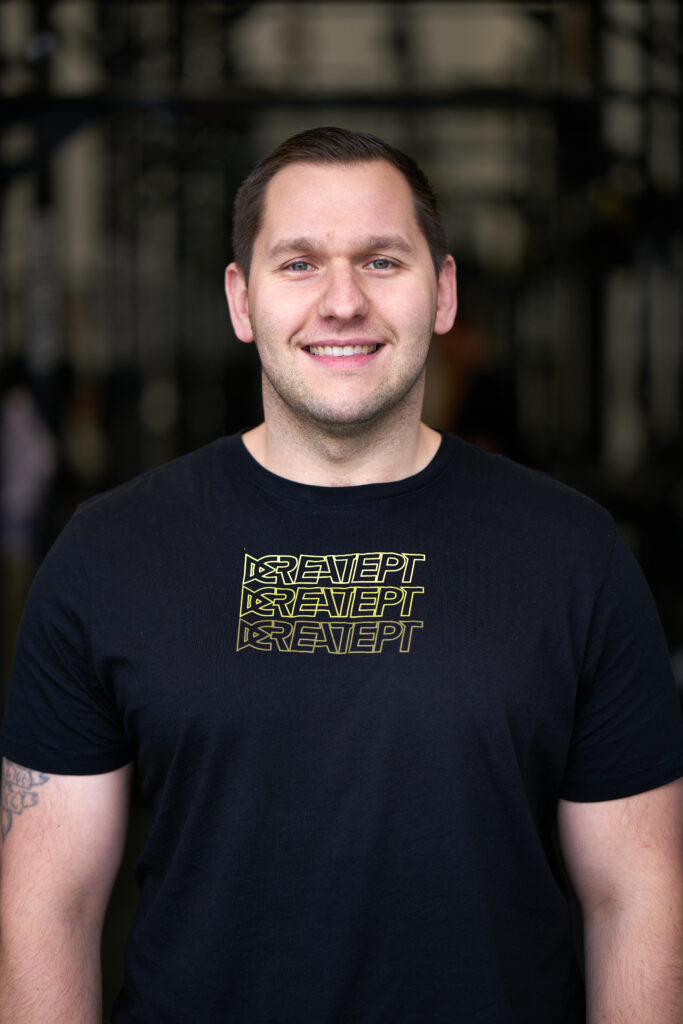 Josh Thursby
Founder & CCO
Josh Thursby
Founder & CCO
Josh qualified as a personal trainer in 2008 and spent twelve and a half years training clients face to face, delivering 45 to 55 sessions a week at his peak. He co-founded Create and writes about the commercial side of the job.