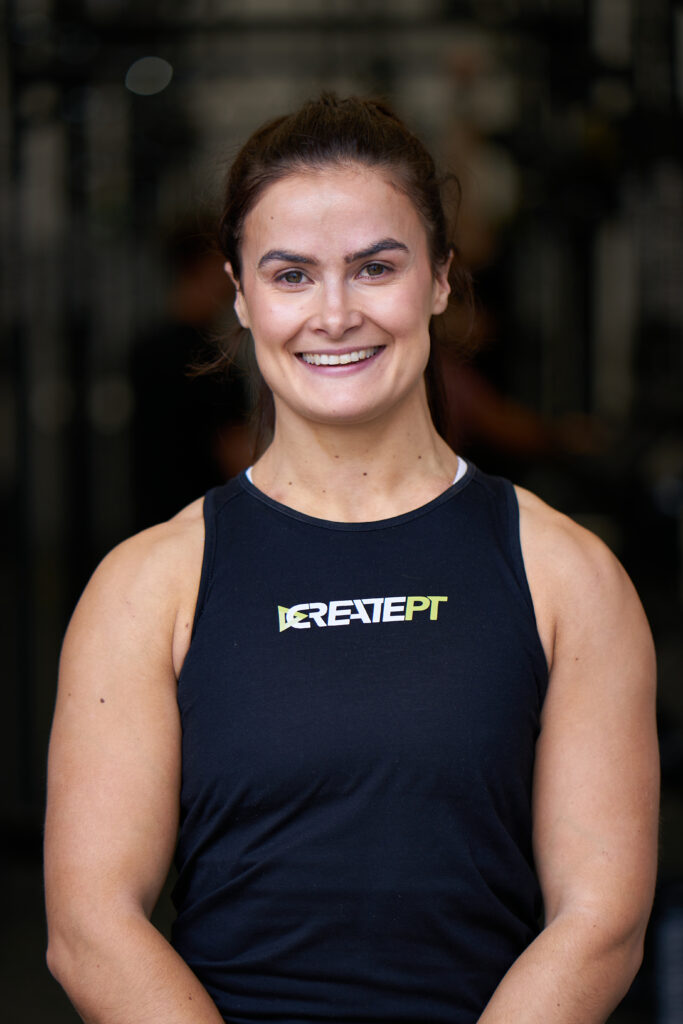
 Josie Winfield
Head of Training · 24 February 2026 · 10 min read
Reviewed by
Faizana Karim
Eleven years in practice, specialising in women's hormone health
Josie Winfield
Head of Training · 24 February 2026 · 10 min read
Reviewed by
Faizana Karim
Eleven years in practice, specialising in women's hormone health
For more information on our content creation process, view our Editorial Policy.
Your starting point shapes your expectations, training approach, and nutrition strategy. Before beginning your 3-month transformation, you need to establish where you stand today — this determines what you can realistically achieve. If you find yourself passionate about this process and curious about helping others do the same, it might be worth exploring a career in fitness. Many of our learners started exactly where you are now. Find out how at become a personal trainer.

Research shows you can lose 5 to 12 kilogrammes of fat and build noticeable muscle within 12 weeks when you train and eat right. Beginners can build 1 to 2 kilogrammes of muscle in their first 3 months of proper training. Advanced trainees build muscle more slowly, around 0.5 to 1 kilogram over the same period. Safe fat loss sits at 0.5 to 1 percent of your body weight per week.
Your 3-month body transformation goals should follow the SMART method: Specific, Measurable, Attainable, Realistic, and Time-bound. A specific goal states exactly what you want — “lose 8 kilogrammes” rather than “lose some weight.” Attainable goals take your current body composition into account. For example, a 15-pound weight loss may be attainable for someone with 35 percent body fat, but not healthy for someone with 16 percent.
Westcott’s research (2012) shows that setting small goals helps people progress towards achieving larger ones. Breaking objectives into smaller chunks provides checkpoints throughout the process — you stay motivated and engaged as you accomplish goals again and again.
Record body measurements at least twice for accuracy, then calculate the average. Use a flexible tape measure for your neck, shoulders, chest, bicep, waist, hips, and thigh. Pull the tape so it sits on the skin surface without compressing it. Measure yourself once a week at the same time under the same circumstances — preferably after you wake up and before breakfast.
Progress photos provide a clear visual representation of long-term changes that numbers alone cannot capture. Take front, side, and back shots every four weeks in the same location, same lighting, and same clothing. Natural daylight works best where possible. Position the camera at chest height and maintain the same relaxed posture each time. Morning photos work best, as your body remains unaffected by food or water intake.
Test your core strength with a plank hold for 60 seconds. Your resting heart rate indicates cardiovascular fitness — an average sits between 60 and 100 beats per minute, with lower rates corresponding to higher aerobic fitness. Count your pulse for 15 seconds and multiply by four to get your heart rate per minute. Push-ups measure upper body strength and muscular endurance.
Turn your passion for fitness into a career.
If you love this stuff, you could get paid to teach it. Download the free Info & Price Guide and find out how Create’s personal training courses can kick-start your fitness career.
Your 3-month gym transformation divides into three distinct phases. Each builds upon the previous one through periodised training that matches your improving fitness levels — the same principles taught in Create’s Level 3 Personal Trainer course.
Focus on fat loss and muscle conditioning using high-intensity resistance training (HIRT) circuits. Train three sessions per week with at least one day of rest between workouts. Each session runs for 30 minutes total, split into two 15-minute circuits performed back-to-back with a 5-minute rest between them. Move from exercise to exercise as fast as possible without rest during each circuit. This phase optimises how your body diverts energy away from fat stores into protein synthesis. The higher volume creates a cardio effect while building strength.
Strip back the volume as you progress into month two and focus on pure strength. Progressive overload increases weight, frequency, or repetitions to challenge your musculoskeletal system. Keep increases within 10% or less each week to allow adaptation while minimising injury risk. When you can comfortably lift a weight for 10 to 12 repetitions with good form, increase the load by 5 to 10% until you can only perform 8 to 12 reps. You’ll notice improved strength by the time this phase ends while continuing to lose fat through your diet. Load-volume becomes the key driver for building muscle mass during this body recomposition phase.
The final month shifts focus towards muscle definition. Maintain your strength training frequency at 3 to 5 sessions per week. Perform 3 to 5 sets per exercise to provide sufficient training volume for preserving muscle. Rest periods decrease throughout this phase to raise heart rate and increase muscular endurance.
Turn your passion into a career — and teach this to others.
Programme design, periodisation, and progression are core modules in Create’s Level 3 Personal Trainer course. If you want to build transformation plans like this for clients, this is where to start.
Download the Free Price Guide →
Nutrition determines about 80 per cent of your 3-month body transformation results. Exercise accounts for the remaining 20%. Your calorie intake and macronutrient balance either support or sabotage your training efforts. Understanding nutrition at this level is also a core part of what qualified personal trainers learn — and teach their clients every day.
Calculate your Basal Metabolic Rate (BMR) using the Mifflin-St Jeor equation. These factors include your weight, height, age, and gender.
For men: BMR = (10 × weight in kg) + (6.25 × height in cm) – (5 × age in years) + 5. For women: BMR = (10 × weight in kg) + (6.25 × height in cm) – (5 × age in years) – 161.
Multiply your BMR by an activity multiplier to estimate your Total Daily Energy Expenditure (TDEE). Sedentary individuals multiply by 1.2, lightly active by 1.375, moderately active by 1.55, and very active by 1.725. Subtract 500 calories from your TDEE to lose fat. This promotes a weight loss of 0.5 to 1 kilogram per week.
You need 1.6 to 2.2 grammes of protein per kilogramme of body weight daily to build muscle while training consistently. For fat loss while preserving muscle, target the higher range of 1.6 to 2.4 grams per kilogram. Spread protein across meals and target 15 to 30 grams per sitting.
Batch cook your proteins and carbohydrates in bulk — this saves time during the week. Prepare meals every two to three days rather than dedicating an entire Sunday afternoon. Store portioned meals in BPA-free containers to maintain accurate calorie tracking. Eat a meal with carbohydrates and protein a few hours before workouts, then load up on quick carbs and protein post-workout while keeping fat moderately low.
The 80/20 rule works well here. Eat nutrient-dense foods 80 per cent of the time while allowing treats for the remaining 20 percent. Budget dessert into your daily calorie plan rather than eliminating it entirely. Track everything you eat using a food tracking app to account for unexpected foods that creep into your diet.
Monitoring your transformation requires tracking the right metrics and knowing when adjustments become necessary.
Weigh yourself daily upon waking and calculate the weekly average rather than obsessing over single readings. Your body’s weight fluctuates 2–5 pounds daily from water retention, food volume, and hormones. Body composition analysis reveals changes between fat and muscle that scales alone cannot detect. Track your training volume by calculating sets × reps × weight to show progress even when the scale stays constant.
True plateaus persist for 3–4 weeks minimum, affecting around 85% of dieters. Adjust one variable at a time for 3–4 weeks before changing anything else when stalled. Add 1–2 sets per exercise if your volume has stayed constant for weeks. Swap in variations if you’ve been training the same movements for too long. Cycle between strength phases of 3–5 reps and hypertrophy at 8–12 reps if you’ve been using similar rep ranges throughout.
Weight loss plateaus can last 8–12 weeks as your body adjusts to changes. Schedule a deload week by reducing training volume 40–50% while maintaining intensity if recovery seems poor despite consistent effort. Your tracking data after the deload often shows a rebound in performance.
Love tracking progress? Imagine doing this for a living.
Monitoring client progress, adjusting training plans, and delivering real results is exactly what qualified personal trainers do every day. Create’s Level 3 PT course teaches you how — online, at your own pace.
Download the Free Price Guide →You now have everything needed for your 3-month body transformation. The three-phase training structure and nutrition guidelines, combined with progress tracking methods, work together to deliver real results.
Consistency matters more than perfection. Track your measurements weekly and adjust when plateaus occur. Trust the process. Your body responds to sustained effort over time, not sporadic intensity.
Start today with clear goals and the right preparation. Keep showing up and your transformation will follow. And if along the way you find yourself wanting to help others do the same, explore how to become a personal trainer with Create — the UK’s most supportive online fitness qualification provider. Read what our graduates have achieved and find out why Create is different.
Turn your passion into a career.
If this plan has shown you how much you love fitness, take the next step. Download Create’s free Info & Price Guide and find out how to get qualified and start earning from what you love.
Yes, significant body transformation is achievable in 3 months with consistent effort. You can expect to lose 5 to 12 kilogrammes of fat and build noticeable muscle within 12 weeks when following a structured training and nutrition plan. Beginners can build 1 to 2 kilogrammes of muscle in their first 3 months, whilst more advanced individuals typically gain 0.5 to 1 kilogramme. The key is maintaining consistency with your workouts and diet throughout the entire period.
If you’re starting lean with minimal muscle mass, a lean bulk approach works best for a 3-month transformation. This involves eating in a slight calorie surplus (around 200–400 calories above maintenance) whilst training consistently to build muscle without gaining excessive fat. A full bulk followed by a cut in the final month isn’t ideal for such a short timeframe, as you’ll spend valuable time losing the fat you just gained rather than maximising muscle development.
Train 3 to 5 sessions per week, depending on your phase of training. In month one, focus on three sessions weekly with rest days between workouts to allow recovery. As you progress into months two and three, you can increase frequency to 4–5 sessions per week. Adequate rest between sessions is crucial for muscle recovery and growth, so avoid training the same muscle groups on consecutive days.
Aim for 1.6 to 2.2 grammes of protein per kilogramme of body weight daily when building muscle. If you’re simultaneously trying to lose fat whilst preserving muscle, target the higher range of 1.6 to 2.4 grammes per kilogramme. Distribute this protein evenly across your meals, aiming for 15 to 30 grammes per sitting to optimise muscle protein synthesis throughout the day.
A true plateau persists for 3 to 4 weeks minimum, with no changes in weight, measurements, or strength. Daily weight fluctuations of 2–5 pounds are normal due to water retention and food volume, so calculate weekly averages rather than reacting to single readings. If your measurements, body composition, and training performance remain completely stagnant for a full month despite consistent effort, then it’s time to adjust one variable in your plan. If you’re serious about understanding the science behind progress — and helping others achieve their goals — explore Create’s personal training courses and turn your knowledge into a career.
Josie Winfield
Head of Training
Josie has worked in fitness for eight years, first as a personal trainer and now as a tutor and assessor at Create. She has competed in CrossFit at elite level and specialises in nutrition.
Reviewed by Faizana Karim, Eleven years in practice, specialising in women's hormone health.
More about Josie →