If you are in pain or think you have injured yourself, see a physiotherapist. Once an injury has been assessed and you have been cleared to exercise, a personal trainer is the right person to rebuild strength and get you back to training properly.
 Reema Ali
Tutor & PT · 23 November 2021 · 6 min read
Reviewed by
Josie Winfield
Competed in CrossFit at elite level, worldwide
Reema Ali
Tutor & PT · 23 November 2021 · 6 min read
Reviewed by
Josie Winfield
Competed in CrossFit at elite level, worldwide
For more information on our content creation process, view our Editorial Policy.
If you are in pain or think you have injured yourself, see a physiotherapist. Physiotherapists are trained and regulated to assess, diagnose and treat injury. Personal trainers are not, and a good personal trainer will refer you rather than attempt it.
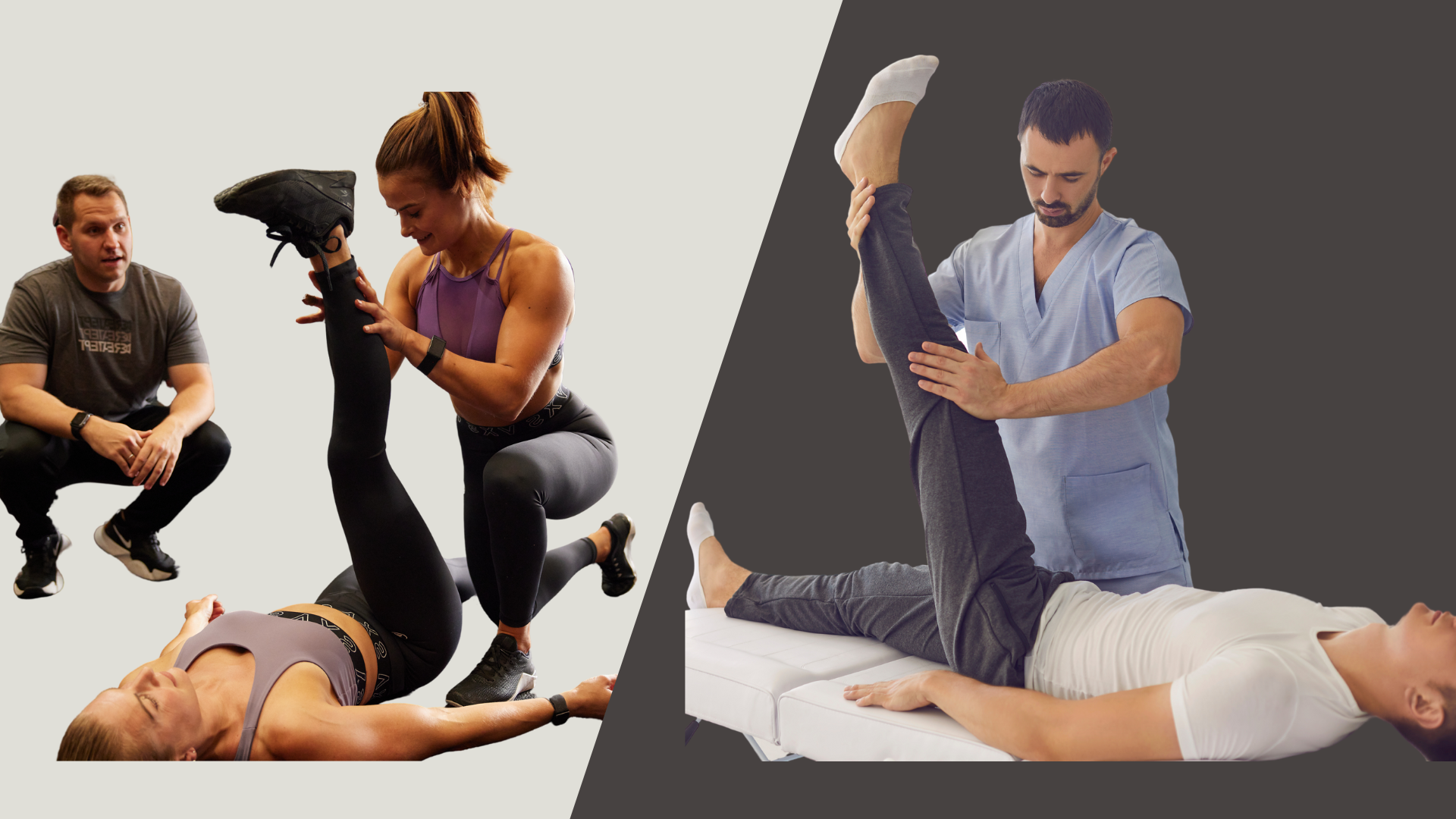
Once an injury has been assessed and you have been cleared to exercise, a personal trainer is the right person to rebuild strength and get you back to training properly. The two roles are complementary rather than competing, so the useful question is not which is better. It is which one you need right now.
The range of activity a professional is trained, qualified and permitted to carry out. Assessing, diagnosing and treating injury sits within a physiotherapist's scope of practice and outside a personal trainer's. This is the distinction that matters, and it is the one most often misunderstood.
In the UK, "physiotherapist" and "physical therapist" are titles protected in law, and using them requires registration with the Health and Care Professions Council. "Personal trainer" is not a protected title and personal training is not a statutorily regulated occupation, which is why standards across the industry vary so much more.
See a physiotherapist, or speak to your GP, if you have pain that came on suddenly, pain that wakes you at night, pain that has not settled after a couple of weeks, swelling, numbness, pins and needles, or weakness in a limb. Those are questions of assessment and diagnosis, and they need a clinician.
You do not need a GP referral to see a physiotherapist privately. For NHS physiotherapy, many areas in England allow you to self refer, so it is worth checking with your GP practice rather than assuming you need an appointment first.
A personal trainer is the right call when the goal is training rather than treatment. Getting stronger, improving your fitness, changing your body composition, learning to lift with good technique, staying consistent, and rebuilding capacity after a clinician has discharged you all sit comfortably within a personal trainer’s remit.
A good trainer will also ask about injuries, previous surgery and health conditions before you start, and will say plainly when something needs a clinical opinion. Being told to see a physiotherapist is a sign of a trainer who understands their scope, not a sign of one who cannot help you.
Holding on to a client who should be referred, in either direction, usually costs that client both money and progress. A physiotherapist should not want a client returning indefinitely with the same injury. A personal trainer who refers an injured client to a physiotherapist they trust is more likely to keep that client long term, because the clinician treats the problem and sends them back.
It works better still when the two communicate: the physiotherapist advises on what to load and what to leave alone, the trainer programmes around it, and the client keeps training while they recover. The trainer is not treating the injury in that arrangement. They are training what is safe to train, on clinical advice.
The gap is rarely goodwill. It is usually confidence and vocabulary. A trainer who can recognise when a movement is a problem, describe it accurately to a clinician, and adapt a session sensibly is a trainer that physiotherapists refer to. That is a learnable skill set, and it sits entirely within scope: spotting what needs referral, understanding what the clinician has advised, and keeping the client training around it.
Create has partnered with Physio Matters on three courses built for exactly this: adapting to painful movement, working injury prevention into programming, and keeping clients training when something is sore. They cover the spine, the upper limb and the lower limb, including shoulder elevation problems, back pain, and troubleshooting the squat and deadlift.
None of these qualify you to diagnose or treat injury. They help you work confidently and appropriately within your scope, and alongside the people whose scope it is.
The Level 3 GP Exercise Referral qualification is designed for trainers who take referrals from healthcare professionals and work with clients who have controlled medical conditions. It is the formal route into the working relationship this article describes.
Reviewed August 2026. Restructured to answer the question in the title. The scope of practice difference between the two professions is now set out directly, guidance on which to see and when has been added, and course links have been corrected.
Reema Ali
Tutor & PT
Reema has been a personal trainer since 2014, working with clients of all ages and abilities including those with additional needs and disabilities. She assesses personal training qualifications for Create.
Reviewed by Josie Winfield, Competed in CrossFit at elite level, worldwide.
More about Reema →