
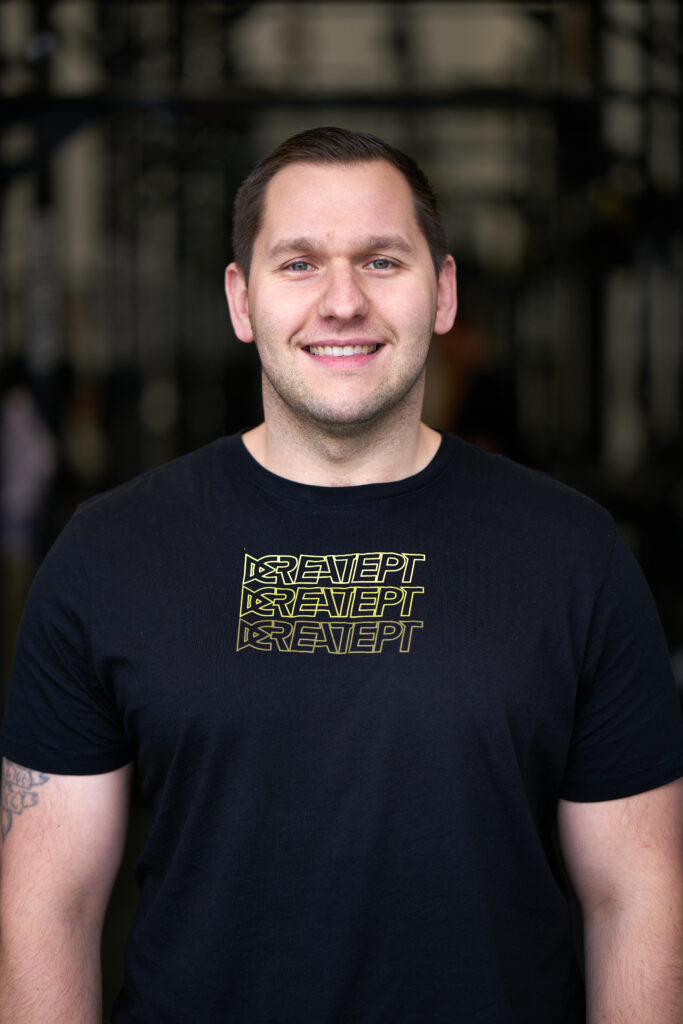
 Josh Thursby
Founder & CCO · 10 January 2025 · 4 min read
Reviewed by
Adam Rhodes
Owned a gym for eight years before founding Create
Josh Thursby
Founder & CCO · 10 January 2025 · 4 min read
Reviewed by
Adam Rhodes
Owned a gym for eight years before founding Create
For more information on our content creation process, view our Editorial Policy.
The idea of becoming a personal trainer might seem out of reach if you’re in your 30s, 40s, or even 50s. Isn’t this a career for the young and hyper-fit? Far from it – in fact, let’s be honest, age and life experience can be powerful assets in any industry, and the fitness industry is no exception.

It’s a cliché and truism to say that fitness is a journey rather than a destination – and there’s a reason plenty of people say it. Personal trainers, like their clients, come in all shapes and sizes and often at plenty of different points on said journey.
Clients often value this, value training with someone else balancing work, family, and health, who understands the physical and emotional changes that come with age. They value the maturity, communication skills, and ability to empathise that age often gives us.
Becoming a personal trainer is about inspiring others, helping them build confidence, and showing that health and wellness can be achieved at any stage of life. Older trainers entering the arena can do this incredibly well.
Discover the perfect course to become a qualified personal trainer. We offer a wide range of qualifications for all budgets and career paths.

Starting a career in personal training later on can give you some great advantages, including:
Though you will have these advantages, there are still some concerns you must be careful of if you plan on becoming a personal trainer later in life. These include:
Starting your journey into personal training can be hard, but it can all become a lot more manageable if you break it down into a few smaller steps.
Firstly, choose a certification program that suits your schedule and interests. There are options for distance and in-person study, weekend courses, intensive courses, courses with financing options, level 2 and 3 combined personal training courses and courses with these levels broken down into individual payments so you can save and study as you go… plenty to meet any schedule and cost.
You will also want to find a niche that suits your experience and interests – this could be functional fitness, rehabilitation, training older adults, that kind of thing. Specialisation will always set you apart.
And you need to get yourself out there. Personal training is still very much a word-of-mouth business – use your existing network to spread the word about your services and make yourself visible and approachable on social media, in community centres, and at local events.
Do all of this, and you should have no problem becoming a personal trainer, even if you have a few years under your belt.
More relevant guides:
Josh Thursby
Founder & CCO
Josh qualified as a personal trainer in 2008 and spent twelve and a half years training clients face to face, delivering 45 to 55 sessions a week at his peak. He co-founded Create and writes about the commercial side of the job.
Reviewed by Adam Rhodes, Owned a gym for eight years before founding Create.
More about Josh →