▶ Watch Sophie
The qualification that takes you from writing programmes to coaching athletes. Be the reason somebody runs faster, lifts heavier, and lasts a full season.

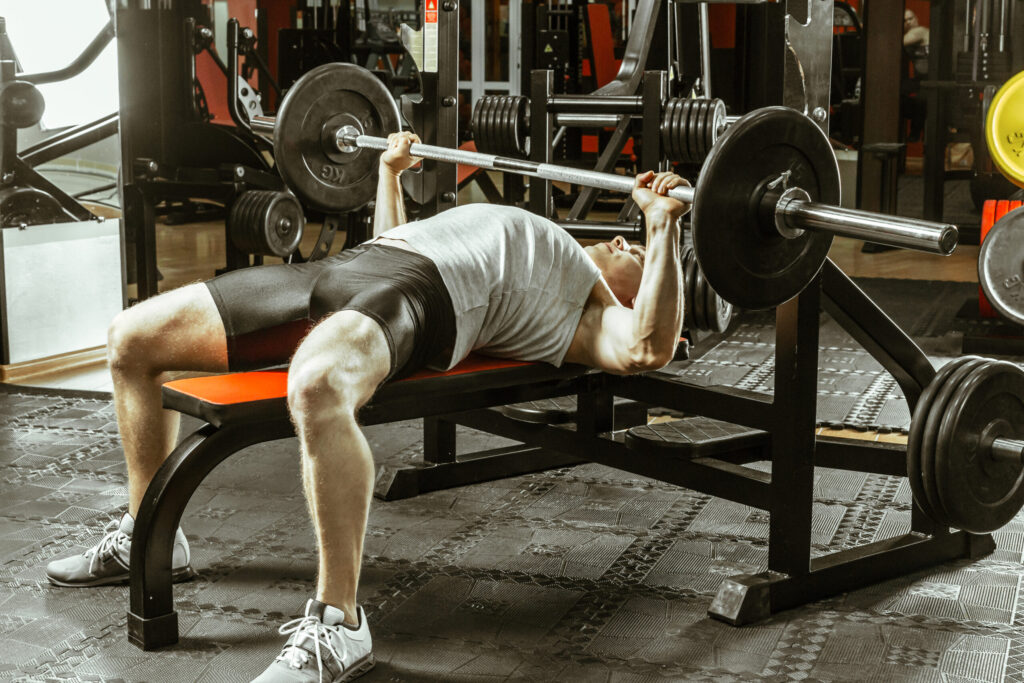
The Level 4 Strength & Conditioning Diploma is designed for coaches who want to go beyond general fitness and work with athletes properly. You'll learn how to assess performance, build structured programmes, and coach with intent. From needs analysis and testing to periodisation and advanced training methods, this course gives you the tools to support real athletic development. It's built for personal trainers, sport coaches, and fitness professionals who want to move into strength and conditioning with confidence and credibility. You won't just learn theory. You'll apply it. You'll analyse a real athlete, build a full 12-week programme, and coach through it. That's where the learning sticks.
Most Level 3 trainers who want athletic work never get near it, and it is rarely because they are not capable. Club and academy roles list a Level 4 or a degree as a minimum, so applications are filtered before anybody reads them. Meanwhile the clients who would benefit most from what you already know are being sent to somebody with a certificate you could have had a year ago.
This is the qualification that gets you read.
How to assess performance and run testing and apply periodisation and advanced methods to coach athletes with intent.
This module introduces coaches to the foundations of needs analysis , the process of systematically evaluating both the demands of the sport and the individual characteristics of the athlete. Learners explore how to research and analyse sport-specific requirements, apply evidence hierarchies, and gather athlete data through structured consultation, forming the basis for all subsequent programme design decisions.
Learners examine how to select, administer and interpret a range of athlete tests across physical, physiological and movement domains. The module covers force and power profiling, energy system testing, speed assessment, movement screening and anthropometric analysis, equipping coaches with the skills to build a comprehensive athlete profile and communicate findings clearly through reporting.
A focused practical module in which learners apply their needs analysis and testing knowledge to construct a complete athlete case study. Using a real or hypothetical athlete, coaches integrate sport demands, athlete profiling data and consultation findings into a structured document that will inform ongoing programme planning.
This module builds the theoretical and practical framework for structuring an athlete's training over time. Covering goal setting, the FITT principle, training load management and a comprehensive overview of traditional and contemporary periodisation models, learners develop the ability to design coherent long-term training plans that balance stress, adaptation and recovery.
Learners explore the physiological foundations of resistance training, from the immediate cellular responses to chronic adaptations. The module covers how strength is defined and developed, the mechanisms of mechanotransduction, and the key variables that govern resistance training programming, giving coaches a science-backed understanding of how to drive the adaptations their athletes need.
This module focuses on the art and science of designing individual training sessions within a broader programme. Coaches learn how to structure session order for optimal adaptation, manage concurrent training demands, plan warm-up and recovery protocols, and ensure that training transfers effectively to sport performance through appropriate specificity.
Moving beyond programming, this module addresses the human side of high-performance coaching. Learners develop skills in building effective coach to athlete relationships, delivering technical feedback, providing psychological support, and recognising RED-S in athletic populations. The module closes with a focus on reflective practice as a tool for ongoing professional development.
An in-depth examination of linear speed development, from the mechanical principles of acceleration through to maximal velocity mechanics. Coaches study the laws of motion, sprinting biomechanics and the technical and physical qualities that underpin each phase of a sprint, enabling them to assess, coach and programme speed work with precision.
This module covers the often-overlooked aspects of speed work , stopping, turning and reacting. Learners examine the biomechanics and training of deceleration, the technical demands of change of direction, and the perceptual-cognitive elements that distinguish agility from pure COD speed, developing a holistic approach to multidirectional movement training.
Coaches explore the full spectrum of explosive training methods, including plyometrics, jump training and throwing activities. The module addresses the underpinning science of stiffness and the force-velocity relationship, classification systems for exercise selection, and the role of rotational movement in athletic performance, providing a comprehensive toolkit for developing power.
A technical module focused on the application of Olympic weightlifting in an S&C context. Learners study the adaptations and benefits of the lifts, master the phases of movement and safe failing protocols, and develop the coaching eye required to identify and correct technical errors , enabling them to teach these complex movements confidently and safely.
This module examines how to develop the energy systems that underpin sport performance. From the physiological demands of different sports to the adaptations driven by conditioning work, learners discover how to select appropriate training methods, use key performance markers and quantify and monitor training load to optimise conditioning outcomes.
Grounded in detailed anatomical knowledge, this module equips coaches to design effective trunk training programmes. Learners study the structure and function of the spine, pelvis, abdomen and wider trunk musculature before applying this knowledge to the selection and coaching of exercises that develop the strength, stability and control required for high-performance sport.

This module addresses the unique physical and developmental needs of young athletes. Covering long-term athlete development frameworks, physical literacy, maturation and growth, and the risks of early specialisation, coaches learn how to apply age-appropriate training principles, manage growth-related injury risk, and support the holistic development of athletes throughout childhood and adolescence.
The final module explores advanced methodologies for coaches working with experienced athletes seeking to maximise performance. Learners evaluate the evidence base and practical utility of techniques including high-intensity and velocity-based resistance training, isometrics, complex training and accommodating resistance, gaining the knowledge to apply these methods appropriately within periodised programmes.
You finish withFocus Awards Level 4 Diploma in Strength and Conditioning
You'll achieve a Level 4 Strength & Conditioning Diploma, accredited by Focus Awards and aligned to industry standards. This qualification is recognised by employers, insurers, and performance environments across the UK and beyond.
You'll need a Level 3 Diploma in Personal Training or equivalent. This ensures you already understand the foundations of training before moving into advanced performance work.
You'll be assessed through practical, applied work that reflects real coaching. Interactive workbooks to build understanding as you go Assignments based on real coaching tasks A full athlete case study and 12-week programme Practical coaching filmed and submitted for feedback Everything you complete mirrors what you'll actually do as a coach.
Drag the deposit and the term. Every figure updates, including the total you would pay by the end.
The only provider in the UK to offer it. Not a trial period. Not credit towards something else. Your money back.
98.8% of learners rate the course as satisfactory or better. A qualification people do not rate is not worth selling, so if the course does not do what we say it does, we should not be keeping your money.
You have 14 days from the day you enrol to change your mind, for any reason. Fully online courses keep the full 14 days. Where a course includes in-person elements and you attend one inside the 14 days, the cancellation right ends at that point.
A separate promise that applies once you have completed the course. It is not a cancellation right and it is not affected by the 14 day period. Both exist, and you do not have to choose between them.
Study online on your schedule with no fixed start dates. Experienced S&C coaches guide you through video and written content.
Study online, on your schedule. You'll work through a mix of video and written content, guided by experienced S&C coaches. There are no fixed start dates or deadlines, so you can fit learning around your life. This is structured learning without unnecessary pressure. You move forward when you're ready.
Working with the team at Create has been a great experience; the content, standards of training and tutor quality is first class. Their learning platform is easy to use, and the course content includes everything an aspiring fitness professional needs to be successful within the industry. I always prioritise connecting with trainers who study with Create to because I trust the quality and level of support offerred within the courses. As I recruit trainers across 75 gyms, both in the UK and internationally - it's exciting to see the next generation of coaches entering the industry with a Create PT certificate.
We're proud to offer Create learners the opportunity to work within our gyms. Having a relationship with Create for some time now, we've seen first-hand how seriously they take education and how well they prepare their learners for a career in personal training. Their courses provide a strong foundation, and with our ongoing internal education and guidance, we're able to develop these learners into confident and successful personal trainers. We're always happy to interview any learner who completes a Create course.
▶ Watch Sophie
▶ Watch Greg D
▶ Watch Becky
▶ Watch Jen Stanley
Same teaching, same support, same guarantee on every one. The only difference is how far you specialise, and you can decide that later rather than today.
You get access to your learningEnrol and your account is live straight away. No cohort to wait for and no start date to work around.
Start working through the modulesStudy at your pace, in the order that suits you. Everything stays open for the whole of your access period.
Use the support when you need itTutors who mark the work answer the questions. Same working day replies, and marking inside 72 hours.
Complete your qualificationSubmit, get feedback, resubmit free of charge for as long as you have access. Nobody is passed before they are ready.
Join the Create ClubQualified is the start. The Club is where you keep learning, ask questions and stay in touch with the people you studied alongside.
Yes. Level 4 builds on Level 3 Personal Training. If you’re not yet qualified, our PT Diploma + S&C package includes Level 2, 3 and 4.
It’s self-paced with no deadlines. It is a very in-depth comprehensive course spanning 15 modules, and as a Level 4 Diploma, it is equivalent to a foundation degree. As such it typically takes around 9 months to complete.
Yes, it’s self-paced and online.
Yes. It’s accredited by Focus Awards and endorsed by CIMSPA, meeting recognised industry standards for strength and conditioning. This makes it suitable for working with athletes/sports teams and progressing regular clients towards more sport-specific training programmes.
The course is a Level 4 Diploma, which makes it the most comprehensive, in-depth S&C course available in the UK. It is made up of 15 modules covering topics like programming for strength, power and performance, periodisation, coaching the main lifts, and monitoring/working with athletes.
You’ll be qualified to work as an S&C coach with athletes, sports teams and advanced clients.
It’s for qualified personal trainers who want to advance into strength and conditioning — e.g. working with athletes and sports performance.
Or the one a runner trusts with their season. The work exists and it is not going anywhere. This is the qualification that lets somebody hire you for it.