Business & Marketing

100+ Fitness Trends & Statistics That Define 2026

100+ Fitness Trends & Statistics That Define 2026

For more information on our content creation process, view our Editorial Policy.

People’s fitness goals keep changing faster than ever. While 76% of individuals want to be fit, only 48% exercise regularly. These numbers tell an interesting story.

The fitness industry’s £3.9 billion valuation hasn’t solved a basic problem – 31% of adults still don’t meet basic physical activity targets. The fitness world continues to change as AI-powered personal training, virtual reality workouts, and advanced wearable technology look set to rule 2026. These aren’t temporary trends. Digital fitness has grown over 30% since 2021, and AI fitness apps show a 17% yearly growth.

The 2026 fitness trends could radically affect public health. Your risk of early death drops by up to 30% with regular exercise, but only 3 in 10 people meet government activity guidelines. The stakes are high – healthcare systems might spend about US$ 27 billion yearly between 2020 and 2030 due to physical inactivity. Notwithstanding that, recent trends look promising. On-demand video classes have surged by over 300% after COVID, and integrated wellness participation has jumped by more than 45%.

General Fitness Landscape

Overall Participation & Activity Levels

  • 76% of individuals want to be fit
  • Only 48% exercise regularly
  • 31% of adults don’t meet basic physical activity targets
  • Only 3 in 10 people meet government activity guidelines
  • Regular exercise reduces the risk of early death by up to 30%

Industry Valuation

  • UK fitness industry: £3.9 billion valuation
  • Global fitness market continues to expand despite participation gaps

Economic Impact of Inactivity

  • Healthcare systems are projected to spend approximately $27 billion USD yearly between 2020-2030 due to physical inactivity

Post-COVID Growth

  • On-demand video classes surged by over 300% after COVID
  • Integrated wellness participation jumped by more than 45%

AI-Powered Personal Training

Adoption & Usage Statistics

  • 78% of personal trainers now use AI to build custom workout plans
  • AI is now “the backbone of programming, member communication, scheduling, personalisation and staffing”

Performance & Efficiency

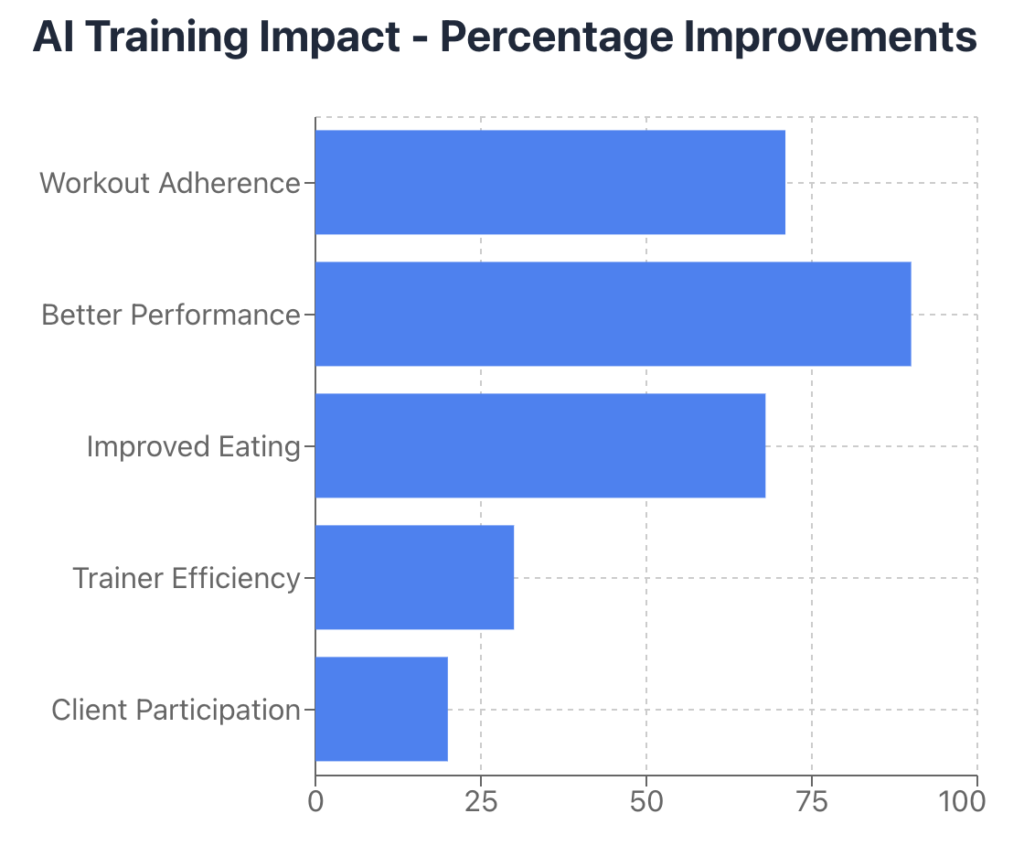
  • Trainers using AI tools can handle 30% more clients without dropping service quality
  • Client participation increases by 20% when trainers use AI tools

Market Projections

  • Global AI fitness market expected to reach £27.58 billion by 2031
  • Annual growth rate: 19.5%

User Outcomes

  • 71% higher workout adherence with AI technology
  • AI chatbots help users lose an extra 3.5 pounds compared to traditional methods
  • 68% of people improve their eating habits when using AI tools
  • 90% of users perform better with AI-guided training

Virtual Reality (VR) Workouts

Market Size & Growth

  • VR fitness market: £10.39 billion in 2024
  • Projected growth to £11.14 billion in 2025 (7.3% annual increase)
  • Expected to reach £14.64 billion by 2029

Consumer Interest

  • Nearly 25% of online adults want to buy VR headsets
  • 18% plan to use VR headsets primarily for exercise

Wearable Fitness Technology

fitness tech market growth

Ownership & Adoption

  • Almost 50% of U.S. adults now own a fitness tracker or smartwatch

Market Projections

  • Market value: £49.26 billion in 2024
  • Expected to reach £230.98 billion by 2032

Accuracy Metrics

  • Overall accuracy across common measurements: 67.40%
  • Heart rate measurements: error rates as low as 3%
  • Energy expenditure readings: error margins exceeding 30% across all devices
  • Sleep tracking: overestimates total sleep time by more than 10% compared to medical-grade equipment

Popular Devices

  • Fitbit Charge series: consistent step count accuracy
  • Apple Watch: heart rate monitoring error rate below 10%

Online Fitness Classes

Market Size & Growth

  • Online fitness industry: £8.51 billion in 2021 (77.33% growth from 2019)
  • Projected to reach £46.86 billion by 2027

Class Format Comparison

  • Heart rates averaged 14% higher during gym classes vs. streaming/on-demand
  • Gym workouts scored 13% more enjoyable than digital alternatives
  • Gym workouts scored 14% more satisfying than digital alternatives

User Preferences (2026)

  • 72% of consumers choose online fitness for schedule flexibility
  • 75% of active adults use live streaming workouts
  • 70% pick on-demand videos
  • The hybrid approach leads with a 60:40 gym-to-home workout ratio

Payment Preferences

  • 41% of users prefer monthly subscriptions for live classes
  • 36% choose monthly memberships for on-demand content

Most Booked Online Classes

  • Yoga: 32%
  • HIIT: 15.6%
  • Pilates: 8.3%
  • Barre: 7.9%
most popular fitness classes

Fitness App Market

Market Size & Downloads

  • Global fitness app market: £3.16 billion in 2024 (11.1% increase from the previous year)
  • 345 million people worldwide use fitness apps
  • Annual downloads: 850 million

Market Projections

  • Expected to reach £6.59 billion in 2025
  • Projected annual growth rate: 3.56% until 2030
  • Market size likely to reach £7.85 billion by 2030

User Engagement & Retention

  • Only 7.88% of users remain active after 30 days
  • Nearly all active users (after 30 days) log in daily

Popular Apps by Users

  • MyFitnessPal: over 200 million users worldwide
  • Peloton App+: leads revenue generation among all fitness apps

Impact on Behaviour

  • Sweatcoin users increased daily step counts by 19% over six months

Social Media Fitness Influencers

Effectiveness & Trust

  • 76.6% of people report positive results from following health advice from social media fitness influencers
  • 77.1% believe influencers only sometimes practice what they preach

Platform Performance

  • YouTube stars have the biggest follower counts
  • TikTok creators see the highest engagement at 9.3%
  • YouTube fitness views increased 5x during the pandemic

TikTok Fitness Statistics

  • Sports videos have accumulated 66 billion likes
  • Over 56,000 creators have more than 10,000 followers

Gender Representation

  • Women appear in 78% of fitness videos

Hybrid Gym Models

Adoption Rates

  • Consumer use of hybrid fitness routines grew by 41% between 2020-2022
  • 45% of users prefer hybrid models by 2024
  • 72% of fitness enthusiasts now choose hybrid solutions
  • Over 40% of fitness facilities have implemented hybrid membership options

Traditional Gym Membership Decline

Attrition Statistics

  • 50% of new gym members quit within six months of signing up

Reasons for Quitting

  • 46% quit because of costs
  • Lack of confidence using equipment or feeling out of place
  • Results take longer than expected
  • Need for workout buddies
  • Work and family life make it difficult to attend regularly

Boutique Fitness Studios

Market Size & Growth

  • Market value: £43.13 billion in 2023
  • Grew to £46.85 billion in 2024
  • Expected to reach £75.04 billion by 2030

Studio Size Specifications

  • Typically 800-3,500 square feet

Popular Formats (2026)

  • Pilates: 43% of boutique fitness studios
  • Indoor cycling: 19%
  • HIIT: 18%

Wellness Integration

  • 60% of boutique studios either offer or plan to add wellness services in the next 1-2 years

Strength Training

Demographic Adoption

  • Gen Z: 50% prefer strength training for group workouts (up from 10th place in 2021)

Guideline Adherence

  • Only 24% of women aged 19-65 follow recommended strength training guidelines
  • Only 34% of men aged 19-65 follow recommended strength training guidelines

Sleep & Recovery

Sleep Duration

  • 79% of Garmin users worldwide sleep more than 7 hours
  • 50% of Americans say they need more rest

Fitness for Older Adults

Gym Usage

  • Adults over 65 visit gyms and studios more than any other age group

Baby Boomer Impact

  • 73 million American baby boomers will be over age 65 by 2030

Barriers to Exercise

  • 40.1% cite injury fears
  • 30.5% cite distance from facilities
  • 25.6% cite transportation issues

NHS Recommendations for Older Adults

  • 150 minutes of moderate activity per week
  • Strength exercises twice weekly
  • Daily physical activity

Youth Fitness

Overall Participation

  • 11.5 million Britons belong to fitness facilities (1.6 million more than in 2022)
  • 36% of Gen Z work out regularly
  • 50% of Gen Z want to start exercising but need help taking that first step

School-Based Programs

  • Fitness modules now exist in 45% of public classrooms
  • Five-month programs significantly improve cardio fitness, muscle strength, and movement skills

Digital Tools Market

  • £3.5 billion opportunity through gamification
  • 34% of parents prefer interactive exercise methods for their children
  • Apps making fitness fun for young people grew 9.1% year-over-year

UK Fitness Industry Revenue (2026)

uk fitness industry growth graph 2026

Overall Market Performance

  • UK fitness market value: £6.5 billion (9.3% increase from 2024)
  • Total memberships: 11.5 million (6.1% growth year-over-year)
  • Market penetration rate: 16.9%

Revenue by Operator Type

  • Private operators: 54% of membership revenue, approximately 52% of total members
  • Commercial operators’ penetration rate: 10.95%
  • Public operators penetration rate: 5.95%

Average Revenue Per Member

  • £452 annual revenue per member (£38 monthly)
  • Up from £437 in 2023
  • Up from £410 in 2022

Personal Training Career

Job Growth & Opportunities

  • 39% job growth projected by 2030 (nearly 5x the typical 8% growth rate)
  • Approximately 330,000 trainers to be hired by 2026

Career Satisfaction

  • Career satisfaction hits the 79th percentile compared to other jobs
  • 57% of trainers report never hitting a career plateau

Motivations for Entering the Field

  • 43% entered due to passion
  • 34% joined to help others achieve their goals

Earning Potential (UK)

  • Gym-employed trainers: £20,000-£35,000 annually
  • Freelance trainers: £18-£40+ per hour
  • Self-employed trainer example: 25 hours weekly at £50/hour = £60,000 annually
  • Overall range: £20,000-£60,000 yearly (varies by experience, location, and work setup)

Key Trends Summary for 2026

Technology Integration

  • Digital fitness has grown by over 30% since 2021
  • AI fitness apps show 17% yearly growth

Market Shifts

  • Transition from traditional gyms to boutique studios and hybrid models
  • Increased focus on personalisation and community connection
  • Growing emphasis on mental well-being alongside physical fitness

Demographic Changes

  • Older adults leading gym attendance
  • Youth engagement is increasing through gamification
  • Women are increasingly participating in strength training

Wellness Evolution

  • Recovery and sleep tracking are becoming standard
  • Integrated wellness approaches (combining multiple health aspects)
  • Social connection recognised as key motivator for fitness adherence

FAQs

Q1. How is AI changing personal training in 2026? 

AI-powered personal trainers are revolutionising fitness by providing real-time adaptive programming and using computer vision to analyse form. This technology has improved workout adherence by 71% and allows trainers to handle 30% more clients while maintaining service quality.

Q2. What are the benefits of virtual reality workouts? 

Virtual reality workouts transport users into immersive digital environments, making exercise feel more like gaming. This approach lowers perceived exertion while delivering the same benefits as traditional workouts. VR fitness is projected to reach £14.64 billion by 2029, addressing common barriers like location constraints and time limitations.

Q3. How accurate are wearable fitness devices in 2026? 

Wearable fitness devices have improved significantly, achieving about 67.40% accuracy across common metrics. Heart rate measurements show impressive precision with error rates as low as 3%. However, energy expenditure readings remain problematic with error margins exceeding 30% across all tested devices.

Q4. What’s driving the popularity of boutique fitness studios? 

Boutique fitness studios offer specialised, intimate class-based sessions with skilled instructors, fostering a sense of community. They keep class sizes small, enabling personalised attention. Despite higher prices, consumers value the specialised experiences, with boutique studios seeing profit margins of 20-40% compared to 10-15% for traditional gyms.

Q5. How is fitness becoming more social in 2026? 

Fitness has evolved into a vital social connector, with 25% of Britons belonging to fitness communities. For many, particularly remote workers, workouts have become essential social interactions, with 72% reporting improved social wellbeing through exercise. Group fitness classes naturally foster belonging, with 56% of people more likely to maintain fitness routines when they’re social.

References

https://fitness.edu.au/the-fitness-zone/reviewing-the-top-10-fitness-trends-for-2025-number-8-exercise-for-mental-health/
https://www.wellnessliving.com/blog/how-an-ai-personal-trainer-can-transform-your-business/?utm_cat=1181
https://hurusa.com/8-proven-strategies-to-boost-participation-in-senior-fitness-programmes/
https://create.fit/blogs/ai-personal-training-statistics/
https://lifehacker.com/health/your-ai-personal-trainer-can-do-more-harm-than-good
https://pmc.ncbi.nlm.nih.gov/articles/PMC9858650/
https://www.ukactive.com/wp-content/uploads/2025/04/UK-Health-and-Fitness-Market-Report-2025.pdf
https://www.sciencedirect.com/science/article/pii/S1740144524000913
https://www.clubwise.com/clubwise-blog/top-reasons-members-quit-the-gym-and-how-to-overcome-them-2/
https://www.glofox.com/blog/hybrid-gym/
https://wholesale.rdxsports.com/blog/the-growing-trends-of-hybrid-gyms-in-the-fitness-industry/
https://visualclubmate.com/news/hybrid-gym-model-playbook/
https://www.nasdaq.com/articles/7-cheap-alternatives-to-traditional-gym-resolutions-that-youll-actually-do
https://finance.yahoo.com/news/boutique-fitness-studios-market-report-091300236.html
https://www.lesmills.com/uk/fit-planet/fitness/core-trends/
https://vibefam.com/pricing-strategies-for-yoga-pilates-studios-in-2026-complete-guide/
https://www.garmin.com/en-US/blog/health/why-sleep-matters-and-how-to-track-it-with-garmin/
https://www.marketreportsworld.com/market-reports/kids-fitness-market-14718281
https://onlinelibrary.wiley.com/doi/10.1111/sms.14410
https://www.frontiersin.org/journals/psychology/articles/10.3389/fpsyg.2025.1635912/full
https://www.healthclubmanagement.co.uk/health-club-management-news/Fitness-communities-are-important-drivers-for-social-connections-according-to-Nuffield-Health-research/357050
https://www.trainerfu.com/blog/hybrid-gym/
https://www.runnersworld.com/training/a39774752/should-you-join-a-hybrid-gym/
https://kemtai.com/blog/about-hybrid-fitness/
https://athletechnews.com/fitness-stats-facts/
https://www.movesports.com/en/field-stories/sports/top-fitness-trends-for-2025-embracing-a-holistic-and-tech-driven-approach

Ollie Bell Ollie Bell Managing Director

Ollie has spent 15 years across sport, physical activity and education. He is a published author with leadership certification from Harvard and emerging technology certification from Oxford, and writes about where fitness qualifications are heading.

15+ years in sport and physical activity Published author Leadership certification, Harvard Emerging technology, Oxford

Reviewed by Robert Taylor, Ten years in digital marketing, eight of them in fitness education.

More about Ollie →